The ASI Department at IRIMAS serves as the University of Haute-Alsace’s (UHA) leading center for research in control systems, signal and image processing, instrumentation, and mechanics. With a staff of around thirty permanent employees (faculty members and engineers), it combines fundamental research with practical applications to address major technological and societal challenges.
The department is organized into two complementary teams, based in the heart of Mulhouse’s technology hubs:
The IMTIS team: Specializing in multimodal instrumentation and image and signal processing (based at the Mulhouse University Institute of Technology).
The MIAM team: Experts in modeling, automatic identification, and mechanics (based at ENSISA).
Two major research areas
Les activités de recherche s’articulent autour de deux grands projets fédérateurs :
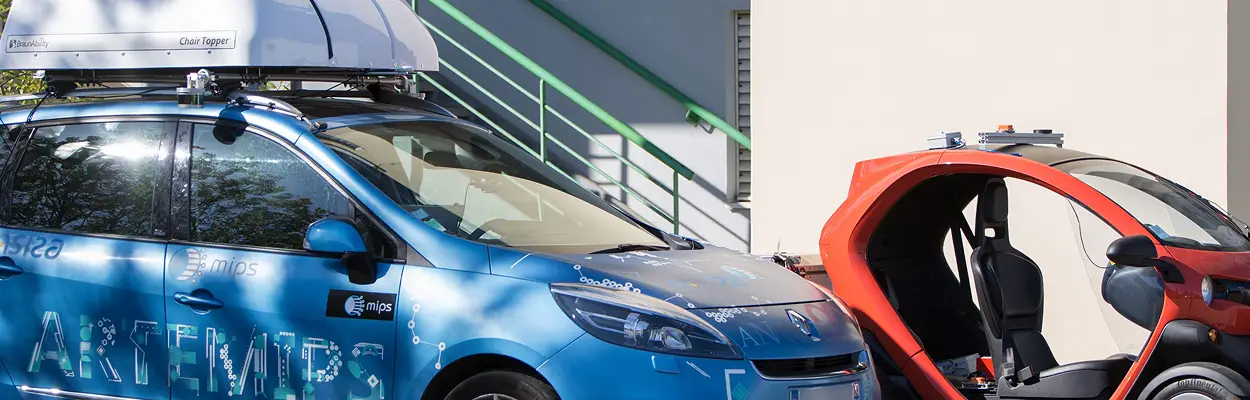
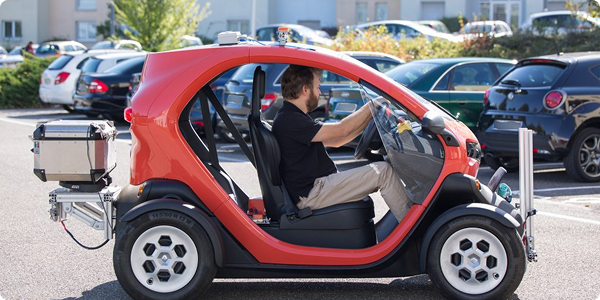
TAM-TAM (Transportation, Autonomy, Mobility): This research area focuses on developing low-environmental-impact mobility solutions. Researchers here design mobile robotics solutions, embedded systems for the automotive and aerospace industries, as well as devices to support independence (disabilities, e-health).
PHYSICA (Physics, Signal, Image): This project focuses on advanced instrumentation (3D cameras, multispectral imaging) and signal processing. Its applications are wide-ranging: from cutting-edge microscopy for biology to non-destructive testing for industry, and smart energy management (smart grids).
A strategic partner for the industry
The ASI department is distinguished by a strong culture of technology transfer. Thanks to fruitful collaborations ranging from local small businesses to multinational corporations, the researchers’ work finds direct applications in Industry 4.0, connected health, and smart transportation.
Inscrit dans une dynamique interdisciplinaire, ASI collabore étroitement avec les autres départements de l’IRIMAS (notamment en Informatique) et de nombreux laboratoires nationaux et internationaux pour développer les systèmes intelligents de demain.
L’équipe IMTIS développe des recherches fondamentales, mais aussi appliquées, allant jusqu’au transfert de technologie, en traitement du signal, traitement d’image, et instrumentation.
The MIAM team brings together automation engineers as well as mechanical engineers to overcome scientific challenges and develop new methodologies and tools that meet the needs of the automotive and aerospace industries.
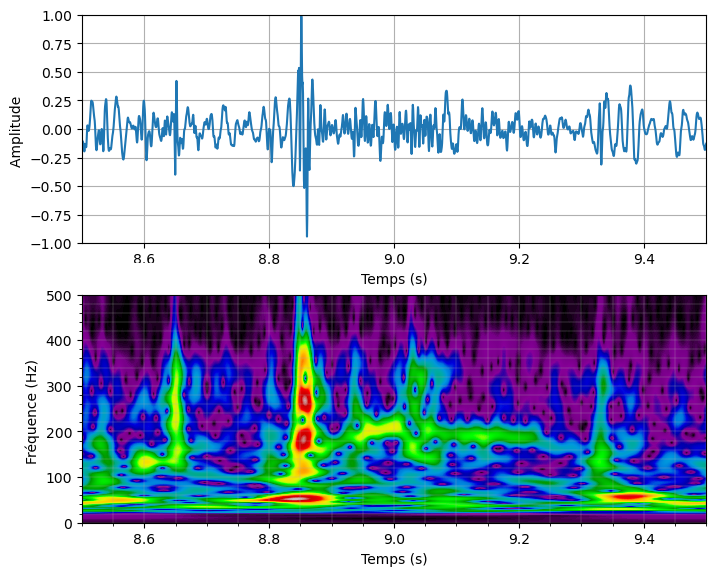
Time-frequency analysis of pathological lung sounds: detection and quantification of abnormal sounds in patients with cystic fibrosis, pulmonary fibrosis, or COPD.
Type: AAP AdiralPeriod: 2023-2026
Department(s) & Team(s): Automation, Signal and Image — IMTIS (Coordinator)
Holographic 3D Maps for Silicone Detection in Living Cells and Tissues 3DHOLOCELL
Type: MatLightPeriod: 2022
Department(s) & Team(s): Automation, Signal and Image — IMTIS (Partner)
Fibers as Optical Resolution Test-patterns for Unlabeled Nanoscopy Assessment FORTUNA
Type: MatLightPeriod: 2026
Department(s) & Team(s): Automation, Signal and Image — IMTIS (Coordinator)



 English